


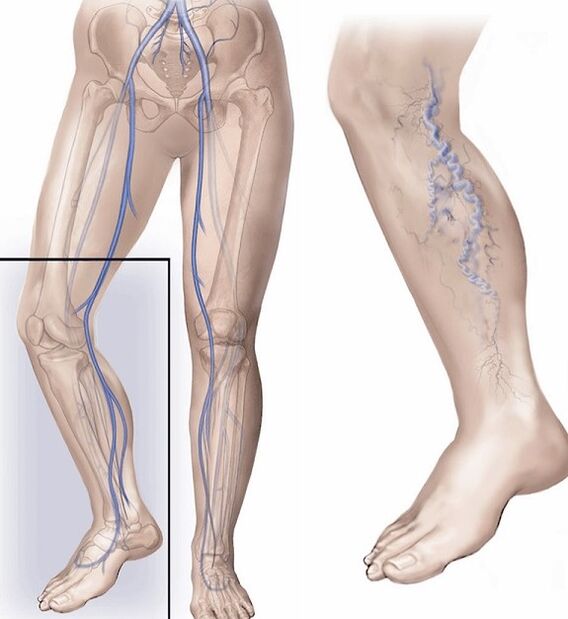
Varicose veins of the lower extremities is a disease of the leg veins, which is characterized by pathological expansion and deformation of the venous vessels and is accompanied by the development of a number of complications.Varicose veins affect the superficial veins of the legs.
According to modern views, the main cause of the development of varicose veins is a defect (congenital or acquired) in the valve apparatus of the veins of the lower extremities, which leads to the development of backflow of venous blood (reflux).Reflux leads to venous overflow and pathological venous outflow (diversion of blood flow).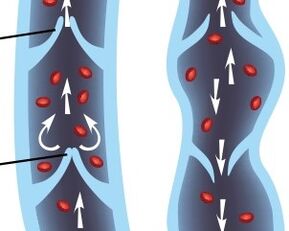 Which, in turn, leads to clinical manifestations of chronic venous insufficiency - such as swelling of the legs, pain along the varicose veins, itching of the skin, cramps in the calf muscles.
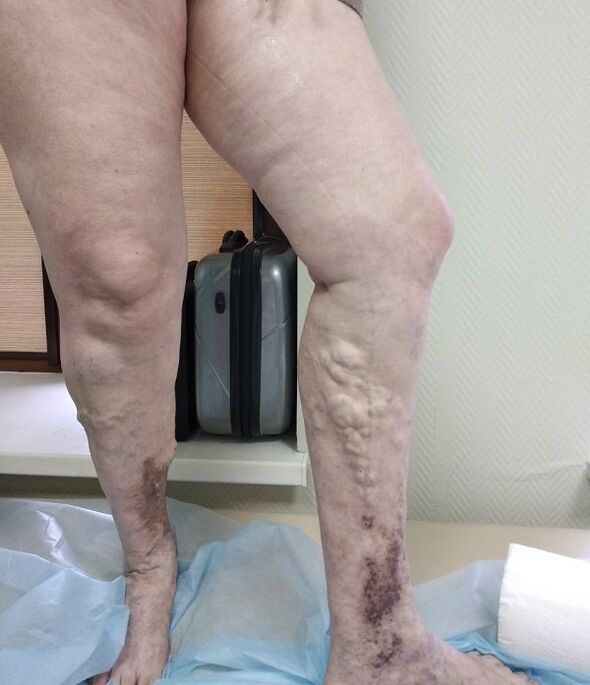
In advanced cases, skin pigmentation occurs in the shin area, the formation of trophic ulcers, bleeding from varicose veins, and thrombophlebitis - inflammation of varicose veins with their thrombosis.Varicose veins develop gradually.
According to European statistics, chronic venous diseases are widespread worldwide.It has been proven that the incidence of varicose veins in the adult population of different countries varies from 2 to 60%.Surprisingly, the incidence of varicose veins in women in African countries and the Pacific region does not exceed 6%, despite multiple pregnancies.At the same time, the incidence of varicose veins in the adult population in European countries reaches tens of percent.It follows that the tendency to develop varicose veins depends on ethnicity.
There is also a clear trend towards an increase in incidence.This may be due to the prevalence of a sedentary lifestyle, obesity and, in some cases, smoking.Patients in “public” hospitals are often denied the opportunity to receive modern diagnostics and treatment for varicose veins of the lower extremities.The lack of modern high-tech methods for diagnosing and treating varicose veins in the public sector of medicine explains that combined phlebectomy remains the main method of treating varicose veins in public hospitals.That is, a very traumatic, inpatient operation with many incisions (and sutures) and mechanical removal of the trunk of the incompetent vein.
This operation is performed under general or spinal anesthesia.According to global statistics, the vast majority of patients with varicose veins can be operated on on an outpatient basis - without hospitalization and also without spinal anesthesia and anesthesia.Conclusion: High-quality treatment of varicose veins is impossible without timely diagnosis and innovative treatment technologies.
Symptoms of varicose veins of the lower extremities
Symptoms (appearances) of varicose veins are signs that allow one to suspect the disease with sufficient certainty.Symptoms can be subjective (so it seems to me) and objective (so I understand).
Subjective symptoms of varicose veins are:
- Feeling of heaviness in the legs.Usually in the calf area.This symptom is more pronounced in the evening.
- Pain in the calf muscles.Most often it is aching, mild pain, sometimes discomfort.
- Pain along the varicose veins.As a rule, it is not intense, it manifests itself more in the evening, after a day at work.
- Leg fatigue.Fatigue is a decrease in tolerance (susceptibility) to physical activity - both static and dynamic.
- “Venous claudication.”Venous claudication is increased pain in the calf muscles when walking.
- Swelling of the lower extremities in the legs and feet.
- Hyperpigmentation of the skin.
- Burning, tingling, itching as the varicose veins develop.
- Trophic venous ulcer of the leg.
Despite their heterogeneity, all symptoms of varicose veins have common features:
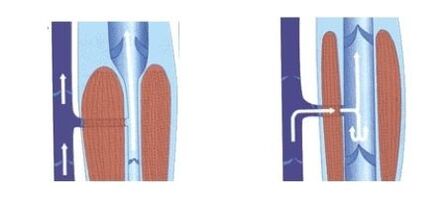
- Symptoms worsen when the patient remains standing or sitting for a long time.This is because the muscular-venous pump does not work in a static position.
- Symptoms decrease after walking, after resting in a horizontal position and also when using elastic compression.
- Change the intensity of manifestation depending on the season.Symptoms usually worsen in summer;
- The manifestations of the disease can intensify before or during menstruation.
All of the symptoms mentioned above are non-specific, meaning they can also occur in other diseases.Therefore, when diagnosing varicose veins, one should rely on objective signs:
- Enlarged intradermal veins and saphenous veins (telangiectasia, reticular veins).Clearly visible to the naked eye.Patients often pay attention to this.The presence of only telangiectasia (spider veins) without other signs of varicose veins is harmless in most cases.However, this is a clear reason for consideration.
- Varicose veins.Easily visible without equipment.The presence of varicose veins is a clear sign of varicose veins.However, normal people often confuse ordinary veins visible through the skin with varicose veins.In the first case, treatment is not required, in the second case it is necessary.
- Swelling of the affected limb.This is also a non-specific symptom, but if varicose veins are present, it may lead the doctor to believe that these facts are related.
- Changes in skin color and texture.In advanced forms of varicose veins, hyperpigmentation (the skin becomes brownish or bluish) often occurs.There may be areas of lipodermatosclerosis.The extreme manifestation is the appearance of a venous trophic ulcer.
Risk factors for varicose veins on the legs
- Non-specific: age, female gender, obesity, hereditary predisposition.
- Specific: pregnancy, taking hormonal drugs (estrogens, gestagens), menopause.
Stages of development of varicose veins
Like any chronic disease, varicose veins develop gradually.There is no clear staging, but we can talk about the initial stage (compensation) and the development stage of chronic venous insufficiency.At the initial stage of development of varicose veins there are no subjective manifestations.The visually recognized appearance of varicose veins is usually not accompanied by swelling, pain or cramps.
At this stage, the disease may remain unchanged for a long period of time.And maybe things are moving forward.In this case, the patient, accustomed to the sight of varicose veins and accustomed to the idea that they do not cause him any harm, cannot associate the appearance of pain, swelling of the legs, itching and night cramps with the progression of varicose veins.This, in turn, can lead to the development of varicose vein complications such as inflammation of the varicose veins (thrombophlebitis), the formation of trophic venous ulcers and bleeding from varicose vein nodes.
In order to standardize the diagnosis of varicose veins and make it as accurate and understandable as possible for a doctor worldwide, phlebologists use the CEAP classification.The CEAP classification takes into account clinical manifestations (C - Clinic), etiology (cause of disease) (E - Etiology), anatomical location (A - Anatomy) and pathogenesis (P - Pathogenesis).
As a rule, the CEAP diagnosis is supplemented by a decoding (nosological formulation), which makes it easier for therapists, general practitioners and specialists to understand.This approach allows the doctor to quickly orientate himself when studying the patient's medical documents.
Diagnosis of varicose veins
Modern diagnostics of varicose veins of the lower extremities sets the following tasks:
- Determination of the presence of chronic venous disease.Many patients who suspect they have varicose veins do not have them.And vice versa.The first task of a phlebologist is to determine whether the patient has this disease or not.
- Determination of the type of venous disease.Doctors speak of a “nosological” form.You need to know exactly which venous vessels are affected, how bad it is and what it has led to or can lead to.
- Determination of treatment tactics – which specific technique (or combination of techniques) should be used in this particular case.The treatment tactics must be discussed with the patient and taken into account in treatment recommendations.
- Evaluation of the effectiveness of the treatment is carried out during treatment and after its completion.
We prefer to carry out all phases of diagnosis and treatment in contact with the patient.
We believe that the patient has the right to accessible and understandable information about his disease and treatment methods.When a patient asks “why,” we never say “because” or “because I always do it that way.”We adhere to the principles of modern evidence-based medicine.
Methods for diagnosing varicose veins
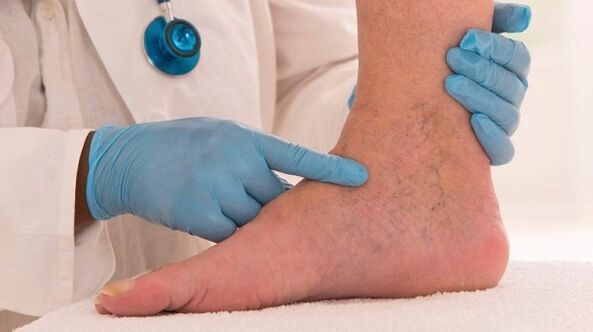
- Clinical study.Includes the clarification of the patient's complaints, the examination and palpation (examination with the hands).
- Ultrasound angioscanning (ultrasound of veins – duplex and triplex scanning).
- Plethysmography.
- X-ray phlebography (ascending and descending).
- Radionuclide phlebography (radiophlebography).
- Computed tomography (CT venography).
- Magnetic resonance imaging (MR venography).
- Intravascular ultrasound examination.
- Thermography.
In the vast majority of cases, a clinical examination and ultrasound angiography by a phlebologist is sufficient to diagnose varicose veins and develop a correct treatment strategy.At the same time, ultrasound angiography - ultrasound of the veins - is the most important instrumental examination for diseases of the leg veins.
During the study, the patient is clearly explained what exactly “his” disease is and how he can fight it.
The examination is carried out while standing (also lying down if necessary) using two or three scanning modes (B-mode, blood flow color coding and pulsed Doppler mode) simultaneously.The ultrasound angioscanning method allows you to visualize the examined vessel, determine the direction of blood flow and its parameters (speed, type of flow).
Both limbs are examined, not just the “sick” one, and we always look at both superficial and deep venous vessels.If necessary, the patient can be prescribed the additional research methods listed above.
Treatment of varicose veins
To treat varicose veins of the lower extremities, the specialists of the leading phlebology center use only the most modern and best methods.
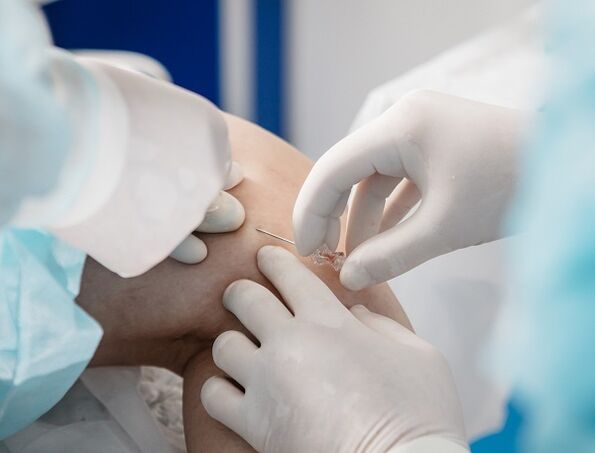
Today phlebologists use the following innovative treatment methods:
- Thermoobliteration (laser and radiofrequency).
- Non-thermal methods for treating varicose veins.
- Sclerotherapy.
- Miniphlebectomy.
- A combination of these techniques.
These methods comply with state European standards.They enable you to have effective, atraumatic and outpatient treatment of varicose veins – without hospitalization.No anesthesia or spinal anesthesia is required.It is this approach that provides the best treatment results.